

Conecte-se | registro
Sobre nós
Home > Rótulo > industrial circuit overload protection

industrial circuit overload protection

Industrial Circuit Overload Protection In industrial settings, electrical circuits are subject to high currents, voltage fluctuations, and varying loads, which can lead to overheating, equipment damage, or even fire hazards. Overload protection is a critical safety mechanism designed to prevent such risks by interrupting excessive current flow before it causes harm. Principles of Overload Protection Overload occurs when current exceeds a circuit’s rated capacity for an extended period, often due to excessive connected loads, short circuits, or ground faults. Protection devices detect abnormal current levels and disconnect the circuit to safeguard components like motors, transformers, and wiring. Key Protection Devices 1. Circuit Breakers – These automatically trip when current surpasses a predefined threshold, cutting off power. Thermal-magnetic breakers combine thermal (slow response for minor overloads) and magnetic (fast reaction to short circuits) mechanisms. 2. Fuses – One-time-use devices that melt under excessive current, breaking the circuit. They are cost-effective but require replacement after activation. 3. Overload Relays – Used in motor control, these detect prolonged overcurrent and signal contactors to shut off power, preventing motor burnout. 4. Electronic Protectors – Advanced systems use sensors and microprocessors to monitor current, voltage, and temperature, enabling precise, programmable responses. Selection Criteria Choosing the right protection depends on: - Current Rating: Must match the circuit’s normal operating range. - Trip Characteristics: Adjustable settings for different load types (e.g., motors vs. lighting). - Environment: Dust, moisture, or temperature extremes may require ruggedized designs. Importance of Coordination In complex systems, protection devices must be coordinated to ensure only the faulty section is isolated, minimizing downtime. For example, a downstream fuse should blow before an upstream breaker trips. Conclusion Effective overload protection is vital for industrial safety, equipment longevity, and operational continuity. By integrating appropriate devices and regular maintenance, facilities can mitigate electrical hazards while maintaining efficiency.

Produto

Categoria:
Método de exibição:
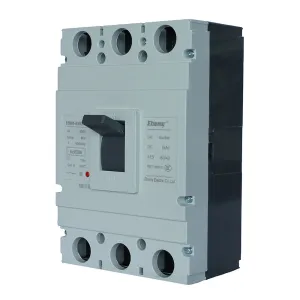
  • Disjuntor em caixa moldada EBM1-630L (MCCB) 3300 IN 630A

    Disjuntor em caixa moldada EBM1-630L (MCCB) 3300 IN 630A

    Sua classificação: Disjuntor em caixa moldada
    Vistas: 3672
    Número:
    Tempo de liberação: 2025-10-11 16:15:38
    ODisjuntor em caixa moldada série EBM1 (MCCB) deEberry Eletrônica é um produto recentemente desenvolvido projetado comtecnologia internacional avançada.Possui umestrutura compacta, alta capacidade de ruptura, distância de arco curta e excelente resistência à vibração,tornando-o uma escolha ideal paraaplicações terrestres e marítimas.Com umtensão nominal de isolamento de 800V (500 V para EBM1-630), este MCCB é adequado para redes de distribuição de energia CA 50 Hz/60 Hz comtensão nominal de trabalho até 690V ecorrente nominal até 1250A.Ele fornece proteção confiável para circuitos e equipament...
Notícias

Categoria:
Nenhum resultado de pesquisa!

Caso

Categoria:
Nenhum resultado de pesquisa!

Vídeo

Categoria:
Nenhum resultado de pesquisa!

Download

Categoria:
Nenhum resultado de pesquisa!

Recrutamento

Categoria:
Nenhum resultado de pesquisa!

Produtos recomendados

Nenhum resultado de pesquisa!
Contate-nos

Telefone: +8613736779975

E-mail: sales@vcbbreaker.com

Águas: Estrada 66, Zona de Desenvolvimento Econômico Iconiente, Zheji, China

Copyright ©  2025 Eberry Electric Group  Todos os direitos reservados

Mapa do site

Este site usa cookies para garantir que você tenha a melhor experiência em nosso site.

Aceitar rejeitar