
 English
 Español
 Pусский
 العربية
 Türk dili
 Indonesia
 Tiếng Việt
 қазақ
қазақ فارسی
فارسی українська
 беларускі
 Filipino
 o'zbek
 български
 тоҷикӣ
 kiswahili
 Монгол
 አማራ
አማራ Ilocano
capacitor bank switching contactor
Capacitor Bank Switching Contactor A capacitor bank switching contactor is a specialized electrical device designed to connect and disconnect capacitor banks in power systems. It plays a crucial role in reactive power compensation, helping to improve power factor, reduce energy losses, and enhance voltage stability in industrial and commercial electrical networks. Function and Importance Capacitor banks are used to offset inductive reactive power generated by motors, transformers, and other inductive loads. The switching contactor ensures smooth and reliable engagement or disengagement of capacitors to maintain optimal power factor correction. Unlike standard contactors, capacitor switching contactors are built to handle high inrush currents that occur when capacitors are energized. Key Features 1. High Inrush Current Handling – Capacitors draw a large surge current when switched on. The contactor must withstand this without excessive wear or contact welding. 2. Pre-Insertion Resistors or Inductors – Some contactors include pre-insertion components to limit inrush current, reducing stress on the system. 3. Mechanically Robust Design – Frequent switching operations demand durable construction to prevent contact erosion. 4. Arc Suppression – Advanced contactors use magnetic or gas-based arc quenching to minimize arcing during switching. 5. Synchronized Switching – Some models support zero-voltage or zero-current switching to reduce transients. Applications Capacitor switching contactors are widely used in: - Industrial plants with heavy motor loads - Commercial buildings with fluctuating power demands - Renewable energy systems requiring reactive power management - Utility substations for voltage regulation Selection Considerations When choosing a capacitor switching contactor, key factors include: - Rated Voltage & Current – Must match system requirements. - Switching Frequency – High-duty applications require heavy-duty models. - Environmental Conditions – Resistance to dust, humidity, and temperature variations. - Compliance Standards – Must meet IEC, IEEE, or other relevant certifications. Conclusion Capacitor bank switching contactors are essential for efficient power factor correction. Their ability to handle inrush currents and frequent switching ensures reliable operation in diverse electrical systems. Proper selection and maintenance help extend service life and improve overall system performance. (Word count: 500)
Produto
Categoria:
-
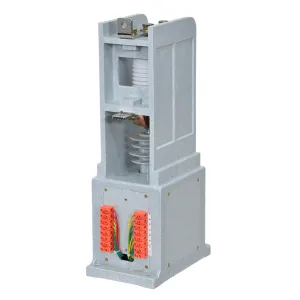
Contator de pólo único VKG1-12 para banco de capacitores
Sua classificação: Contator a vácuoVistas: 1446Número:Tempo de liberação: 2025-09-05 09:32:14Contator a vácuo JCZ7 (G) 12kV 400AEsta série de contatores a vácuo de média tensão utiliza interruptores a vácuo de alta qualidade, combinados com uma estrutura metálica e suportes isolantes, proporcionando excelente desempenho de interrupção. Eles são adequados para sistemas de rede de energia monofásicos ou bifásicos abaixo de 6KV (7,2KV) e 10KV (12KV), permitindo comutação e interrupção de longa distância, partidas frequentes e controle de cargas resistivas, indutivas e capacitivas. O contator a vácuo unipolar de média tensão da série JCZ1 é comumente usado em aplicações de proteção de e...
Notícias
Categoria:
Nenhum resultado de pesquisa!
Caso
Categoria:
Nenhum resultado de pesquisa!
Vídeo
Categoria:
Nenhum resultado de pesquisa!
Download
Categoria:
Nenhum resultado de pesquisa!
Recrutamento
Categoria:
Nenhum resultado de pesquisa!
Produtos recomendados
Nenhum resultado de pesquisa!



 Telefone